Employee Health & Safety Overview

Employee health and safety is a core priority for North American lead battery recyclers. BCI members uphold rigorous safety and environmental standards to protect workers, communities, and the environment while supporting a sustainable battery supply chain.
Protecting People and the Environment in Lead Battery Recycling

Employee health and safety is foundational to the lead battery recycling industry. BCI member recyclers operate under some of the most rigorous safety and environmental standards, with a shared commitment to protecting employees, communities, and the environment while safely recovering critical materials for new batteries.

BCI supports lead battery recyclers through voluntary programs, best practices, and industry collaboration that go beyond regulatory requirements. This includes continuous improvement in workplace safety, emissions controls, and environmental performance across recycling operations.

Watch this short video from the Association of Battery Recyclers (ABR) to learn how the lead battery recycling industry prioritizes employee health and safety.

Comprehensive employee health and safety training at lead battery recycling facilities.

Comprehensive Safety Training for Employees


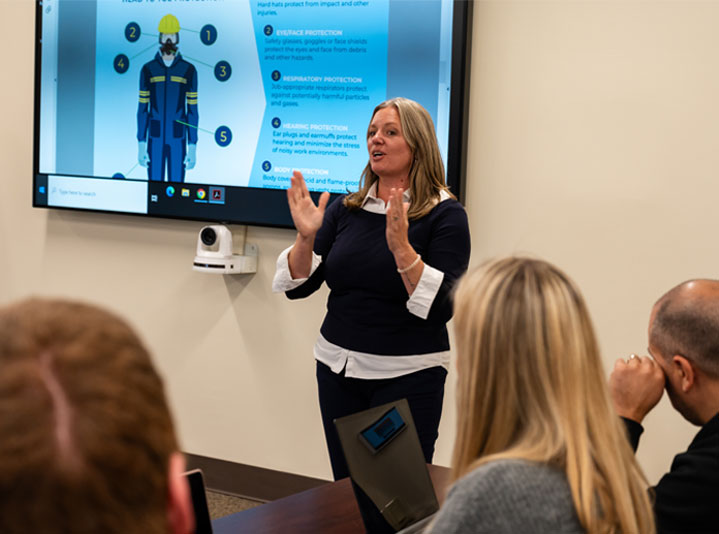
Lead battery recyclers provide rigorous training and ongoing education to equip employees with the skills and knowledge needed to protect themselves and their colleagues. Operations employees receive an average of 32 hours of safety training per year. Regular refresher courses, shift talks, and specialized training sessions ensure employees stay current on best practices and new safety innovations.

Many facilities participate in OSHA’s Safe + Sound Week and other initiatives that make safety engaging and fun, using creative approaches like scavenger hunts, trivia contests, and recognition programs to reinforce safety principles.

Employee health and hygiene protocols at lead battery recycling facilities.

Protecting Worker Health Through Monitoring and Protocols


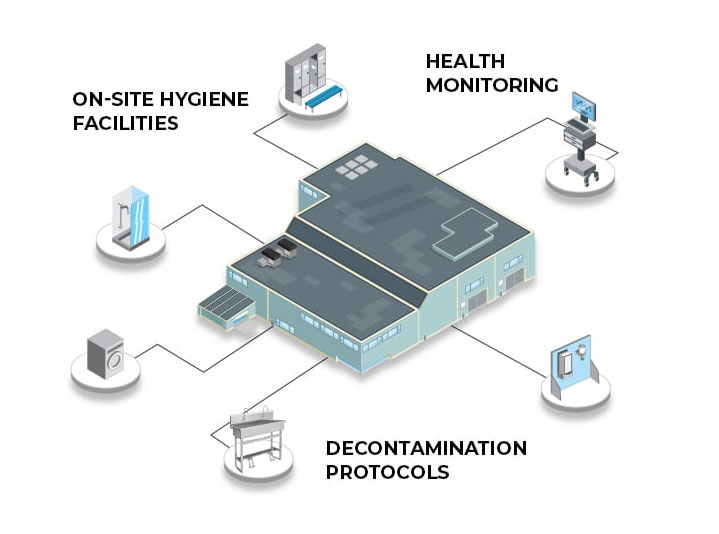
Regular health monitoring is essential to safeguarding employees and ensuring the effectiveness of safety programs in lead battery recycling. Blood lead level (BLL) testing remains the gold standard for measuring and managing occupational exposure, and BCI member facilities maintain rigorous monitoring programs to keep workers safe. Many facilities also provide on-site medical care, offering convenient access to healthcare services for employees.

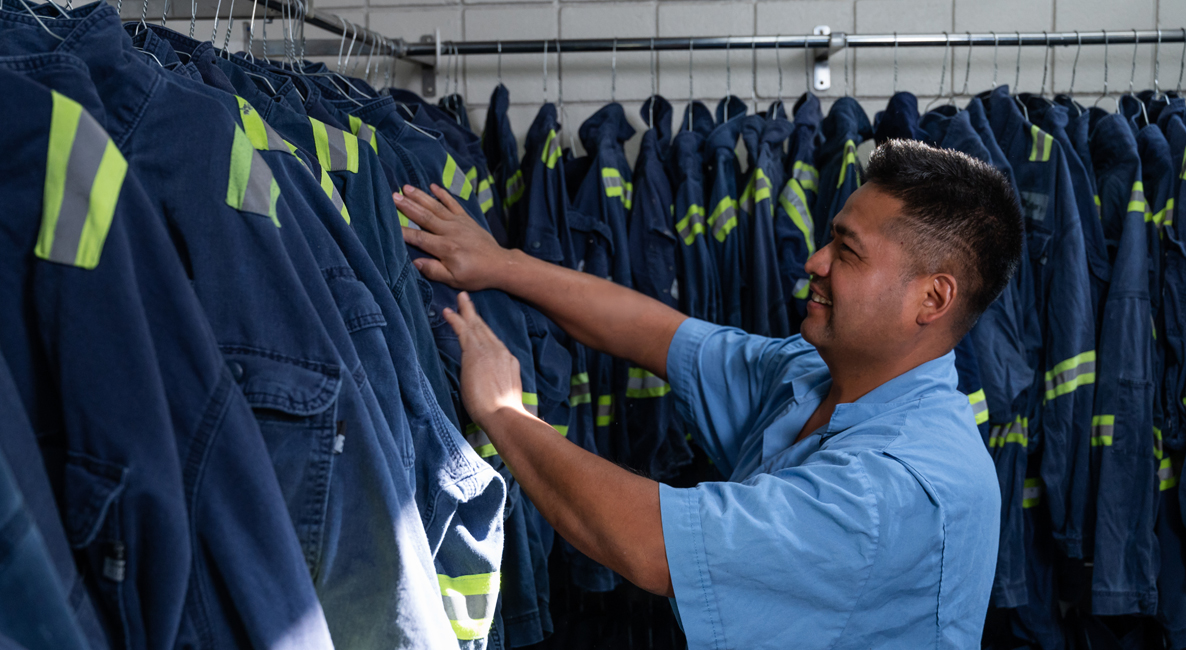
Stringent decontamination protocols add additional layers of protection to prevent contaminants from leaving the workplace. Body vacuum stations, handwashing facilities, and lead-check stations are strategically placed throughout facilities. Separate locker rooms and on-site laundry services ensure that all work garments and protective equipment are professionally cleaned and sanitized, preventing lead dust from leaving the site.

In high-exposure areas, employees are required to shower and change into street clothes before leaving work. This critical step protects not only workers but also their families and the surrounding community. At U.S lead battery recycling facilities, nothing from the workplace goes home—safety, hygiene, and health are maintained at every stage.

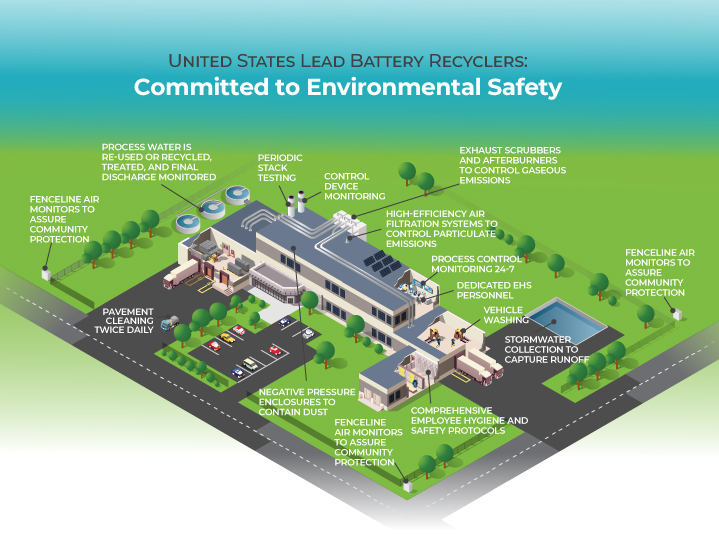
Illustration of a lead battery recycling facility with environmental controls.

Environmental Controls Protect Workers & Communities


Lead battery recyclers use comprehensive environmental controls to safeguard employees and surrounding communities. Perimeter air monitoring keeps emissions far below allowable limits, with industry averages well under OSHA standards and contributing less than 1% of total U.S. lead air emissions.

Process water is captured, treated, and tested to meet or exceed clean water standards, while storm water systems manage rainfall runoff. Facilities also maintain land through regular cleaning, vehicle decontamination, landscaping buffers, and soil testing to minimize dust and monitor environmental conditions.

Roger Miksad

Every American depends on batteries in their everyday life - from the cars and trucks they drive, to the warehouse forklifts critical to supply chain logistics, to the next-gen batteries supporting the nation’s power grid and defense satellites.

Roger Miksad, President, Battery Council International