Circular Economy
The lead battery industry’s established circular infrastructure has become a model for other battery chemistries – and industries – in how to responsibly source, use, reuse and manage materials.

The lead battery industry’s established circular infrastructure has become a model for other battery chemistries – and industries – in how to responsibly source, use, reuse and manage materials.
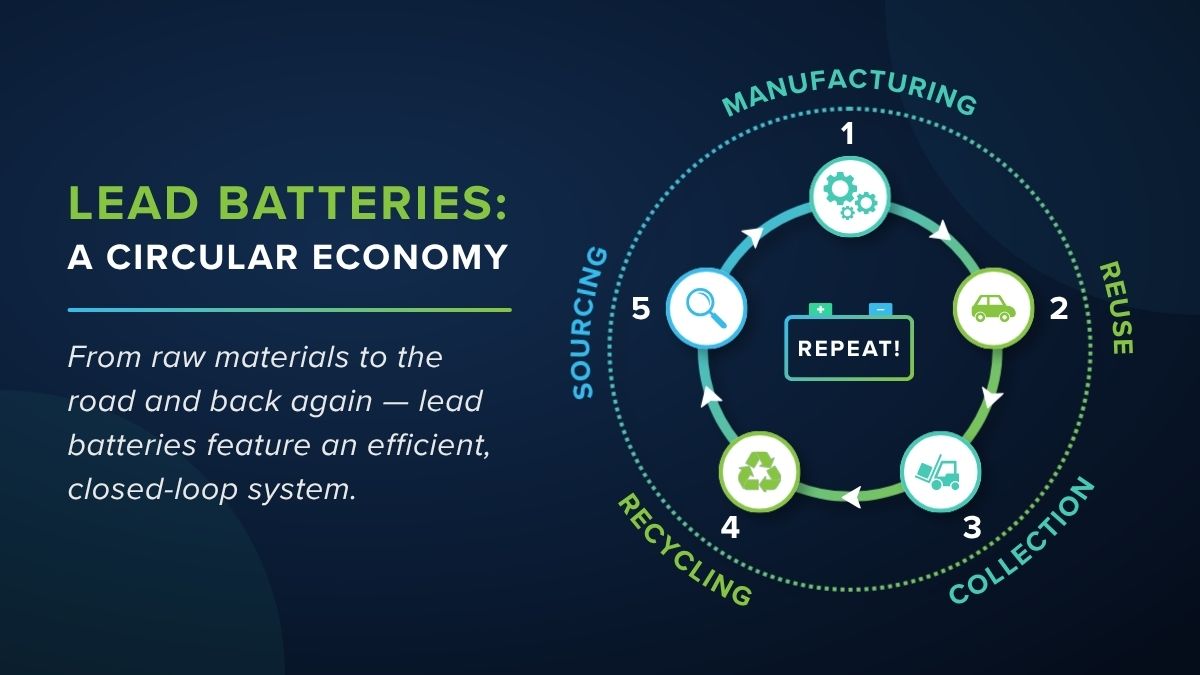
The lead battery industry is a leader in creating a circular economy. In comparing sustainable practices across all life stages, no other battery chemistry equals lead batteries’ closed-loop and remanufacturing success.
Another component of a lead battery’s circular economy model involves designing for recycling, efficiency and remanufacture. As lead battery manufacturers innovate and design new batteries, they collaborate with others to design batteries for recycling and resource efficiency. This helps streamline the recycling of the battery’s key components (lead, plastic, acid) for reuse.
Lead batteries are a model for other battery chemistries – and industries – in how to responsibly design, make, use, recycle and remanufacture materials.
In a traditional, linear economic model, products – including other types of batteries – are designed, used and disposed of. This creates excess waste based on a take-make-use-waste extractive industrial pattern. In contrast, lead batteries use a circular economic model. A circular economy promotes sustainable materials management throughout the life cycle of a product and relies on a make-use-recycle-remanufacture (or closed-loop) pattern.
In a circular economy, the value of products and materials is maintained for as long as possible, and waste and resource use are minimized. When a battery has reached its end of life (EOL), its materials are kept within the economy, to be used again and again to create further value. In many cases, including in the lead battery industry, product designers design for recycling and efficiency from the outset, anticipating use beyond EOL.
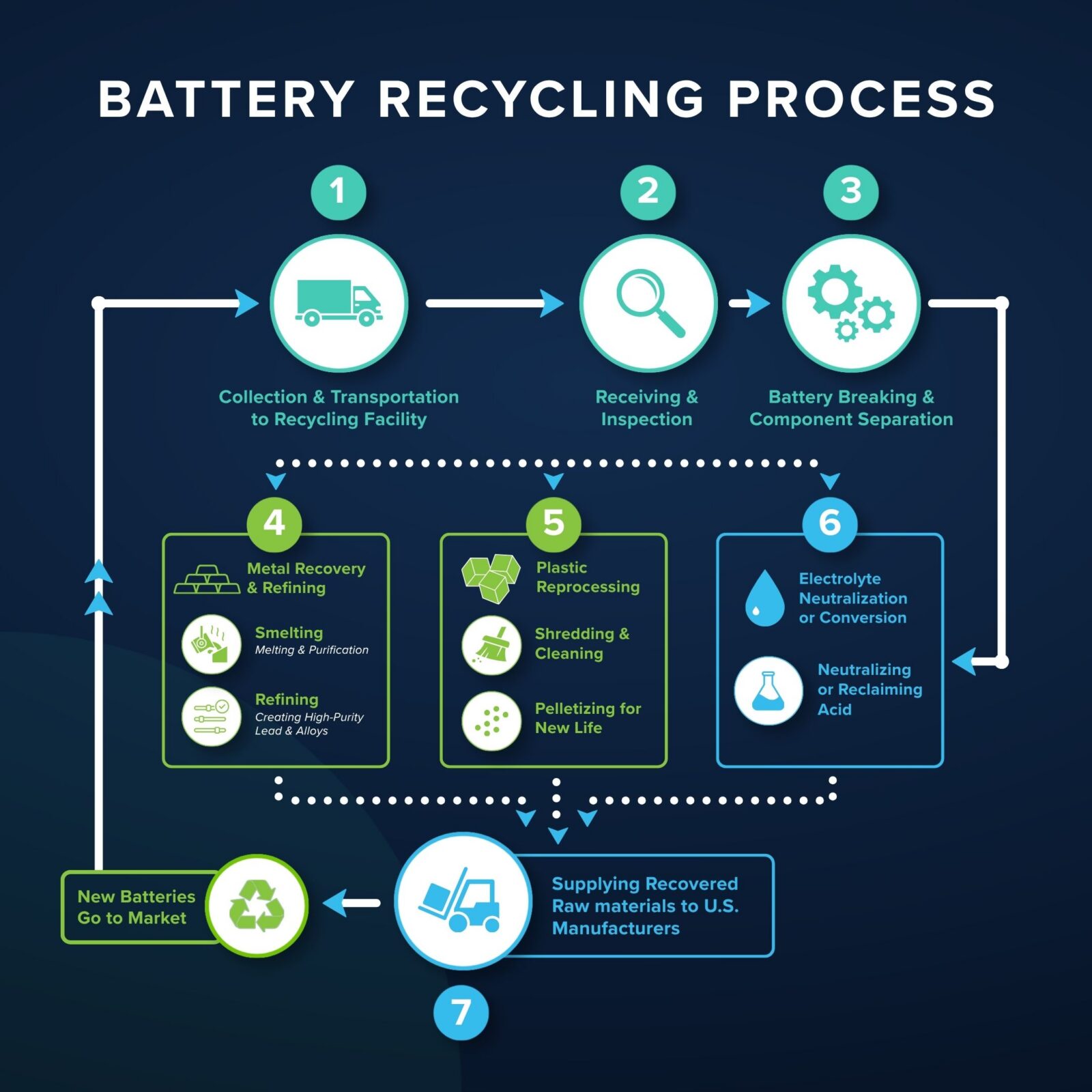
A circular economy, such as the lead battery industry, can reduce CO2 emissions, reduce the scale of the challenge of decarbonizing materials production and contain the cost of achieving an industrial base compatible with a low-carbon economy.
As reported by the EPA, global competition for finite resources will intensify as world population and economies grow. Research shows that 62% of U.S. firms are planning to move to a circular economy. The lead battery industry leads the curve by being among the 16% that have already adopted this sustainable business strategy.
Reusing recycled materials fosters energy independence and contributes to a more reliable secondary supply chain. This also helps to maintain national security by strengthening the resilience of power grids, internet services and databanks as they confront the challenges of an increasingly digital economy.

Fueled by a growing and aging car parc and an increase in the number of batteries in vehicles, we are forecasting continued growth for the North America lead battery market.