
What is BCI’s Blood Lead Program?
For over a century, BCI’s members have continually improved environmental, health and safety standards in the battery industry.
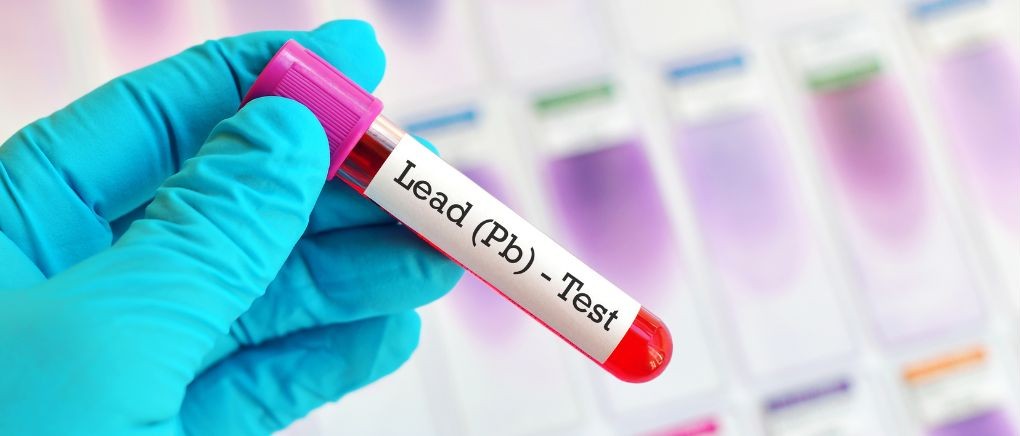
Understanding blood lead levels (BLLs) in industrial settings can be a complicated issue. However, BCI has deep expertise and a history of leadership on this important topic as a global authority on battery manufacturing and recycling.
Today, a significant majority of U.S. lead battery manufacturing and recycling workers maintain BLLs below 10 µg/dL and exceeding OSHA standards.
Key Facts about Blood Lead Levels
The Occupational Safety and Health Administration (OSHA) is the U.S. federal agency that establishes workplace standards. OSHA requires the removal from lead exposure in the workplace of any employee that has a single blood lead level (BLL) test at 60 µg/100g or greater, or an average BLL of 50 µg/100g or greater.1 Since 1997, lead battery manufacturing and recycling companies have voluntarily adopted a successful program to meet blood lead targets more restrictive than those required by OSHA. Battery Council International (BCI) members consistently demonstrate year-over-year reductions in employee blood lead levels.
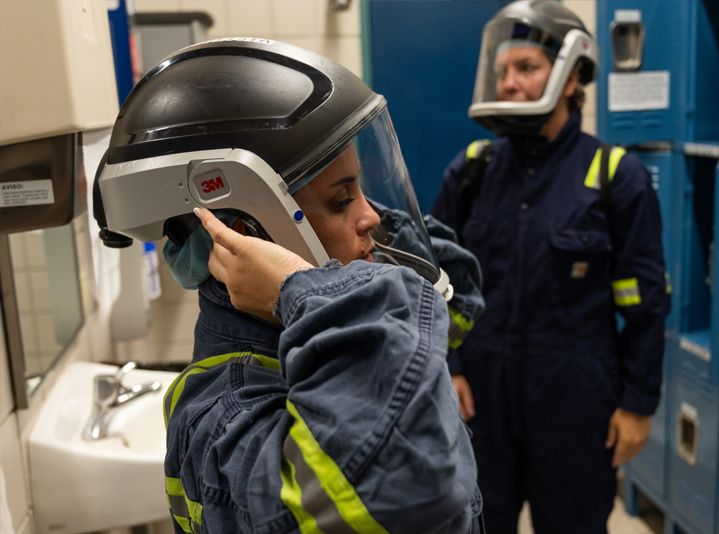
The industry’s current program sets a voluntary target to maintain worker blood lead levels below 20 µg/dL.i
- Today’s lead battery manufacturing and recycling workers stay well below the current blood lead requirements set by OSHA. The majority of BCI members’ workers maintain BLLs below 10 µg/dL.
The Centers for Disease Control and Prevention’s (CDC) surveillance case definition for elevated blood lead levels in adults of 5 µg/dL is used to identify individuals whose blood lead levels warrant further investigation. It does not define an adverse health effect from lead exposure.
CDC states that “surveillance case definitions are not intended to be used by healthcare providers for making a clinical diagnosis or determining how to meet an individual patient’s health needs.”
Two U.S. states – California and Michigan – have adopted occupational lead programs more stringent than the federal standards, and with medical removal provisions that align with the industry’s voluntary targets.
According to OSHA, “Blood lead levels (PbB) are most often reported in units of milligrams (mg) or micrograms (µg) of lead (1 mg=1000 µg) per 100 grams (100g), 100 milliliters (100 ml) or deciliter (dl) of blood. These three units are essentially the same.” 29 CFR 1910.1200 App. A. (II)(B)(3). The OSHA regulations are written using the “100 g” units of measure, but today the use of “µg/dL” is preferred by CDC and others.
What is an occupational exposure limit?
Understanding the difference between the CDC “Case Definition” and an occupational exposure limit.
The CDC adult case definition of a blood lead level (BLL) of 5 µg/dL does not define an adverse health effect from lead exposure, but rather indicates an elevated blood lead level in the general public for exposure surveillance purposes. In the workplace, the binding OSHA blood lead standard is the Federal regulatory benchmark, or a more stringent state, against which compliance of companies is measured.
This is why OSHA was established by Congress in 1970 and charged to protect the health and safety of American workers. OSHA has the authority to set standards that will protect employees from a “material impairment of health.”ii
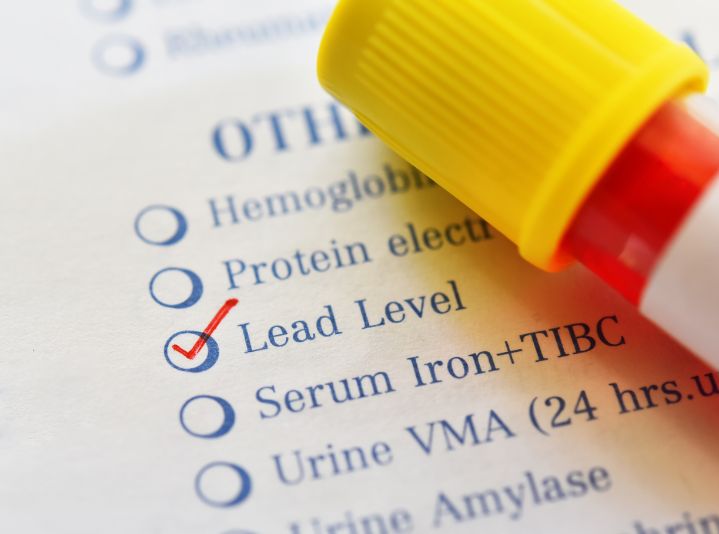
In light of that mandate, OSHA has established limits for the maximum amount of lead permitted to be present in employees’ blood. According to OSHA, a worker’s “blood lead level is the most useful indicator of the amount of lead being absorbed by [the] body.”iii
These standards require workers to be removed from lead exposure when BLLs are equal to or greater than 50 µg/100 g (average of last three samples, or over a 6-month period), or any time the BLL is equal to or greater than 60 µg/100 g. Workers may return to work when their BLL is reduced to a level below 40 µg/100 g.
During the removal period, the worker is typically assigned to other, non-lead exposed duties. OSHA’s proscribed measures were designed so that “compliance with the standard’s provision will protect most workers from the adverse effects of lead exposure.”iv
The National Institute for Occupational Safety and Health (NIOSH) has adopted a national goal of preventing workers from having blood lead concentrations greater than 25 µg/dL. To help meet this goal, OSHA has adopted a National Emphasis Program to institute additional compliance assistance, training, and inspections for workplaces where workers have been tested to have blood lead levels at or above 25 µg/dL.v
OSHA has not amended the workplace removal BLLs in the regulations since 1978. However, two states, California and Michigan, have adopted updated regulations. Four further states have announced efforts to also revise their state-based regulations. To date, the updated state programs have been consistent in reducing the federal medical removal thresholds to require removal after a single blood lead test above 30 ug/dL, or after multiple tests above 20 ug/dL.

The American Conference on Governmental Industrial Hygienists (ACGIH) has adopted a Biological Exposure Index (BEI) for lead of 20 µg/dL to reduce the risks of health impairment resulting from occupational lead exposures. This recommendation is not a government regulatory requirement, and is used to guide occupational health professionals’ assessment of potential workplace exposures. The ACGIH recommendations also align with that of other professional bodies such as the American College of Occupational and Environmental Medicine.vii
The CDC’s 5 µg/dL “case definition” is a blood lead concentration used to identify adults whose BLL may be elevated above the levels typical for the general public so that medical professionals can evaluate the individual for potential lead exposure at home or at work, and to determine appropriate responses. The case definition was never intended to serve as – and is inappropriate for use as – a standalone measure of whether a person is “poisoned” or otherwise adversely affected, and does not represent a “case” in the clinical sense of disease or impairment with associated clinical signs and symptoms.
The CDC website states that “surveillance case definitions are not intended to be used by healthcare providers for making a clinical diagnosis.”viii Such diagnoses can only be made by a medical professional after an individual medical examination. Nor does the CDC suggest that adults require medical treatment due to a blood lead level of 5 µg/dL. Rather, CDC and other experts do not recommend medical treatments such as chelation until blood lead levels exceed 45 µg/dL, and only upon the advice of, and under the supervision of expert medical professionals.ix
How has the lead battery industry met or exceeded OSHA requirements?
The lead battery and recycling industry goes farther than required by the mandates of the OSHA blood lead standard. Since 1997, the industry has adopted a continuous improvement blood lead program committed to achieving voluntary blood lead targets significantly more protective than those prescribed by current regulation.

The voluntary targets have been regularly reviewed and lowered to encourage continuous improvement in member company performance in managing employee lead exposures. The current program’s goal is to have employees in member companies maintain BLLs below 20 µg/dL.
To support the voluntary blood lead reduction program, BCI has developed initiatives to drive continuous improvement in worker health. They include hosting global and regional EHS training conferences for industry professionals, driving the sharing of EHS best practices, the development of training materials, and other efforts. The industry has affirmed these commitments through the adoption of a globally agreed set of seven Guiding Principles, the first and second of which are to “plac[e] environmental health and safety excellence at the heart of our operations”, and to “promote the sound management of lead exposure and emissions by setting continuous improvement targets and sharing best practices.”
Today, a significant majority of U.S. lead battery manufacturing and recycling workers maintain BLLs below 10 µg/dL.
References
i https://batterycouncil.org/Industry-Initiatives/BCI-Blood-Lead-Program
ii OSH Act Sec. 6(b)(5). https://www.osha.gov/laws-regs/oshact/completeoshact
iii 29 CFR 1910.1025 App. A (II)(B)(3) https://www.osha.gov/laws-regs/regulations/standardnumber/1910/1910.1025AppA
iv 29 CFR 1910.1025 App. B (VIII). https://www.osha.gov/laws-regs/regulations/standardnumber/1910/1910.1025AppB
v https://www.osha.gov/enforcement/directives/cpl-02-00-130
vi https://www.woema.org/assets/docs/WOEMA_Webinar_Lead_PPT.pdf
vii https://acoem.org/acoem/media/News-Library/Workplace_Lead_Exposure.pdf