
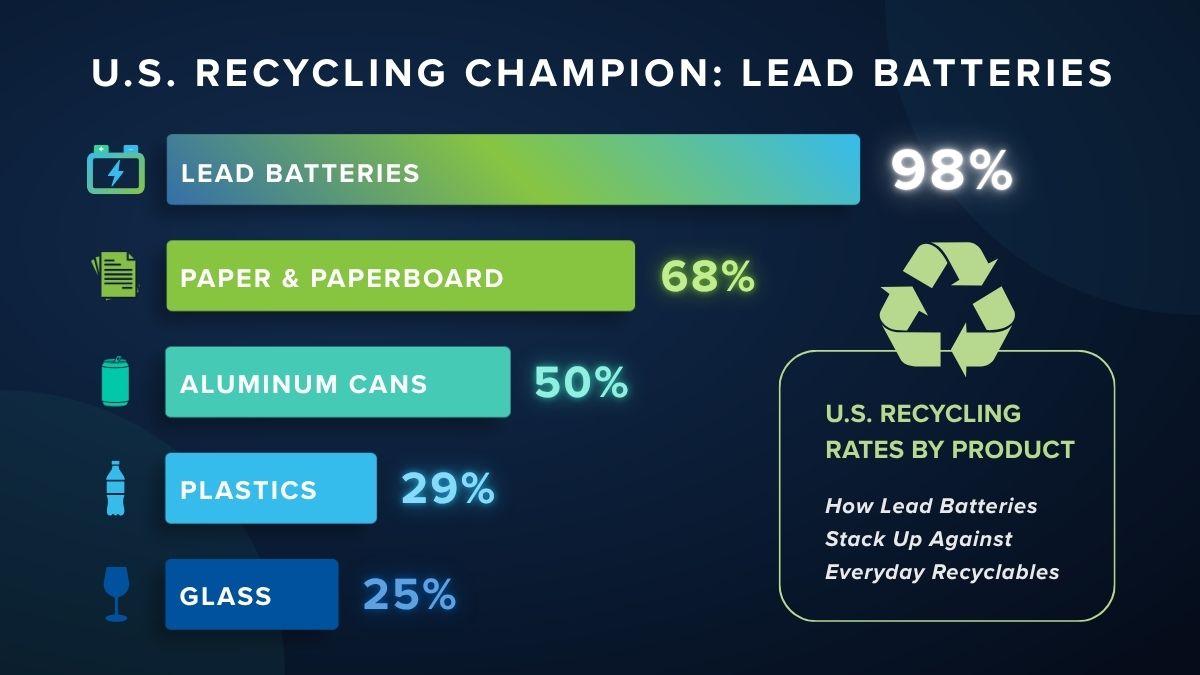
Recent confirmation of a 98% recycling rate for lead batteries shows a model of success to follow as the energy storage industry rises to meet future demand
As global demand for energy storage surges, North American battery manufacturers and recyclers are responding by expanding their capabilities and capacity. U.S. data centers alone are projected to consume more than 420 TWh of electricity by 2030 — and that’s not counting other key applications such as automotive batteries, electric forklifts, emergency backup batteries, and much more.
The industry is ready to rise to that challenge of long-term growth in energy storage. Battery shipments have grown by more than 70 million batteries in North America since 2000, and domestic manufacturers are scaling up to meet the need’s of tomorrow’s economy.
Just as important, however, is the industry’s expansion through responsible growth – with worker safety, environmental stewardship and community well-being as a top priority.
That commitment is a cornerstone of the lead battery industry, which operates one of the world’s most successful closed-loop manufacturing systems. According to Battery Council International’s new U.S. Recycling Rate Study, the industry recycles approximately 174 million lead batteries annually in the United States, recovering more than 2.2 billion pounds of lead and returning this critical mineral to the domestic supply chain.
The environmental benefits of this system are significant. By recovering valuable materials, lead battery recyclers help reduce waste and keep critical minerals circulating within the economy. BCI’s recent study on recycling in North America demonstrates not only the scale of lead battery recycling, but also the success of a circular economy model that supports domestic manufacturing in a safe and responsible way.
A Legacy of Safety
The achievement of a 98% recycling rate in North America is possible because of many factors including innovation and supply chain efficiency. But it’s also because of decades of investment in environmental, health and safety (EHS) programs, workforce training and operational excellence.
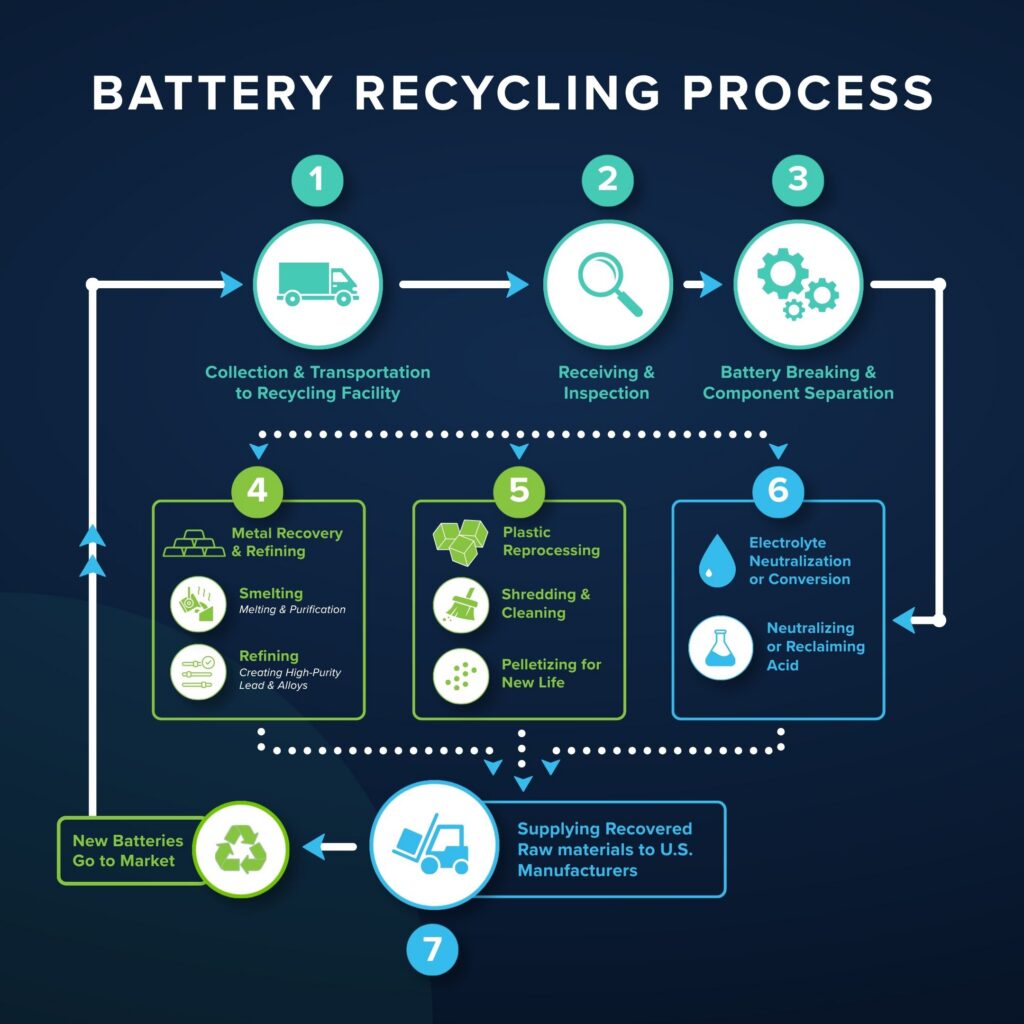
Domestic battery manufacturers and recyclers are committed to protecting workers, communities and the environment while ensuring valuable materials are recovered, recycled and returned to productive use. The lead battery industry’s Environmental Health and Safety achievements include voluntary and proactive steps, with significant capital investments and ongoing workforce training that often surpass regulatory requirements.
A tangible example of this is airborne lead emissions. While the lead battery industry is the world’s largest consumer of lead, U.S. lead battery recycling facilities account for less than 1% of total national airborne lead emissions.
Another example comes from blood lead levels of workers at battery manufacturers and recyclers, which regularly are recorded at half of the federal thresholds among BCI’s members.
Lead Battery Recycling EHS Facts and Figures
- Between 2010 and 2020, U.S. recycling facilities invested, on average, more than $70 million per facility in environmental, health and safety improvements.
- Individual facilities spend about 23% of their annual operating budget on EHS.
- Approximately 10% of on-site recycling industry employees work in EHS-focused roles.
- The recycling industry devotes approximately 15,000 hours annually to EHS training and education.
An Essential Role and Positive Economic Impact
Long-term investments in facilities, environmental controls, worker protections and safety systems have helped strengthen public trust while reinforcing the industry’s commitment to safe, responsible recycling.
These capital expenditures are part of a substantial economic footprint made by the lead battery industry. Manufacturers and recyclers invest millions of dollars in new technologies, operational improvements and facility upgrades to increase production as well as enhance environmental performance.
The resulting economic benefits extend well beyond individual facilities, with the downstream impact of the North American battery industry totaling $10 trillion in output thanks to 54 million jobs related to or reliant on batteries.
Manufacturing and Recycling Batteries at Scale – Responsibly
The industry’s ability to meet growing demand while maintaining high EHS standards demonstrates that sustainability and operational excellence can and should advance together.
By expanding capacity within well-regulated, high-performing facilities, the lead battery industry is helping to ensure that critical minerals remain in North America, where they can be recovered, recycled and returned to the economy. This is a model that all battery chemistries should emulate in an effort to secure the materials for production and support the broader domestic economy.
The ability to recycle 174 million batteries each year didn’t happen by accident. It’s the result of continuous investment and a commitment to a circular manufacturing system.
As demand for energy storage continues to increase, lead battery recyclers remain focused on responsibly recovering critical materials, protecting workers and communities, and delivering environmental and economic benefits that support a more sustainable future.