Lead Battery Recycling
What is lead battery recycling, and why is it important?
U.S. recycling rate studies show roughly 99% of used lead batteries have been recycled since 2000
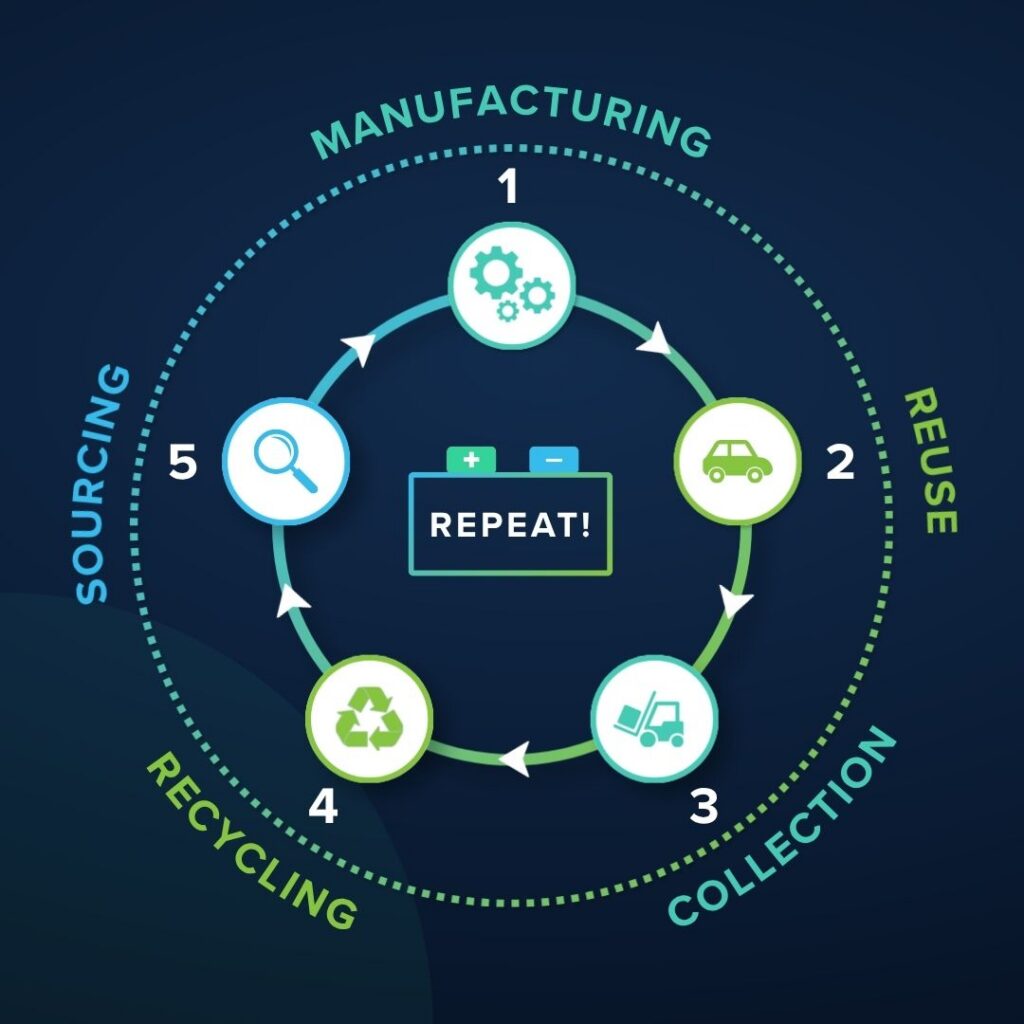
Lead battery recycling involves the breaking apart of old batteries to recover the lead metal, sulfuric acid, and plastic casing materials. Every one of these materials can be recovered in the process and used to manufacture new lead batteries.
Lead batteries are the most recycled consumer product in the United States, with the latest data showing a recycling rate of roughly 98% and a long-term average of 99% since 2000. Battery Council International has tracked these figures through independent studies dating back to 1960.
According to the U.S. Lead Battery Recycling Rate Study (2026) from BCI, the industry recycles approximately 174 million lead batteries annually in the United States for a recycling rate of roughly 98% as of data through 2025. The long-term recycling rate for lead batteries averages 99% since the year 2000, according to BCI recycling data.
That kind of sustained pattern of excellence is rare in environmental policy. After decades of steady improvement, the U.S. battery industry continues to hold itself to a high standard – and independently validated, third-party data confirms its success.
What is the history of lead battery recycling in the U.S.?
Data is unreliable before 1960, and reported recycling rates for lead batteries were substantial but inconsistent from 1960 to 1988, ranging between about 70% and 87%.
Steady improvement began in 1989 with the adoption of a BCI model law that created a successful nationwide framework. The recycling rate topped 90% for the first time that year, and steadily improved to a current long-term average of 99%.
Lead battery recycling was reasonably common before then, but no uniform system governed how spent batteries were collected, handled, or kept out of landfills.
In 1989, Battery Council International published its Model Battery Recycling Legislation that provided a common framework for lead battery recycling.
The model law required retailers to accept used batteries in exchange for new ones, prohibited disposal of lead batteries in landfills or incinerators, and assigned clear responsibility for proper handling at each step between the consumer and the recycler.
States began enacting versions of this framework, and the previously inconsistent recycling rate improved and then held steady at a rate above 98% in the decades that followed.
Sample of national recycling rate data (Source: Studies commissioned by Battery Council International)
| 77.1% in 1980 | 93.1% in 1990 | 96.5% in 2000 | 98.2% in 2010 | 99.5% in 2020 |
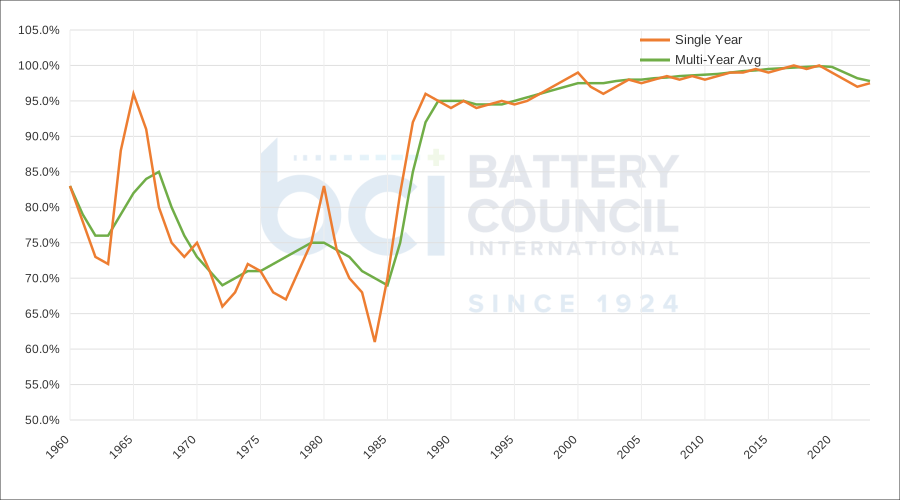
In every BCI-commissioned recycling rate study conducted from the early 1990s to the present, including the most recent study, the industry’s recycling rate has remained at or above roughly 93%. The U.S. recycling rate has averaged 99% since 2000.
The battery industry successfully closed decades of variability in just a few years, then maintained a high recycling rate going forward. Validated data from third parties shows a long-term track record of success for lead battery recycling rates, and not a short-lived peak tied to one favorable year. The 99% long-term average also spans three decades of changing economic and market conditions.
What is the most recycled product in America?
The answer is lead batteries. Domestic recycling of lead batteries in the United States now performs at a level few other consumer products approach. By comparison, the EPA reports that paper and paperboard are recycled at only 68% – well below the 98% rate for lead batteries.
Consumer plastics have a recycling rate of about 29% according to the EPA, and the long-term recycling rate for aluminum cans is reported at around 50%. Glass is recycled at roughly 25%.
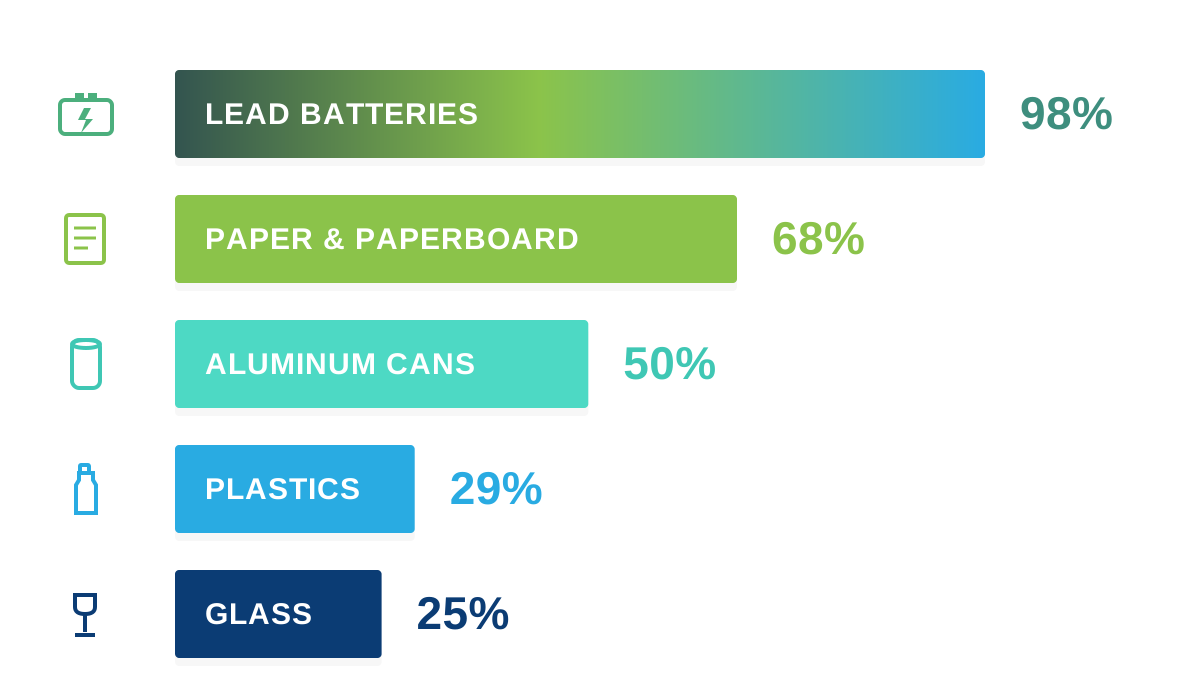
Many factors influence recycling rates for consumer products. For legislators and regulators evaluating take-back or extended producer responsibility frameworks, the lead battery record offers a documented case study: a single, clearly defined model law, adopted broadly at the state level, that produced measurable improvement almost immediately and has sustained that improvement, without significant erosion, for three decades running.
U.S. lead battery recycling rate by year, 1960–2025
| Year | U.S. Lead Battery Recycling Rate | Year | U.S. Lead Battery Recycling Rate | Year | U.S. Lead Battery Recycling Rate |
| 1960 | 83.3% | 1983 | 68.9% | 2006 | 97.4% |
| 1961 | 78.4% | 1984 | 72.4% | 2007 | 97.5% |
| 1962 | 76.4% | 1985 | 70.4% | 2008 | 97.5% |
| 1963 | 74.7% | 1986 | 73.8% | 2009 | 98.0% |
| 1964 | 83.8% | 1987 | 83.7% | 2010 | 98.2% |
| 1965 | 87.0% | 1988 | 86.9% | 2011 | 98.4% |
| 1966 | 80.3% | 1989 | 90.5% | 2012 | 98.6% |
| 1967 | 81.9% | 1990 | 93.1% | 2013 | 98.8% |
| 1968 | 81.2% | 1991 | 94.0% | 2014 | 98.9% |
| 1969 | 77.2% | 1992 | 94.2% | 2015 | 99.0% |
| 1970 | 75.9% | 1993 | 94.3% | 2016 | 99.1% |
| 1971 | 74.1% | 1994 | 95.0% | 2017 | 99.4% |
| 1972 | 72.6% | 1995 | 94.4% | 2018 | 99.5% |
| 1973 | 71.1% | 1996 | 94.3% | 2019 | 100.1% |
| 1974 | 75.6% | 1997 | 94.7% | 2020 | 99.5% |
| 1975 | 74.6% | 1998 | 94.9% | 2021 | 99.6% |
| 1976 | 72.1% | 1999 | 95.1% | 2022 | 98.8% |
| 1977 | 72.0% | 2000 | 96.5% | 2023 | 98.7% |
| 1978 | 72.5% | 2001 | 96.8% | 2024 | 98.4% |
| 1979 | 74.1% | 2002 | 97.5% | 2025 | 98.3% |
| 1980 | 77.1% | 2003 | 97.9% | ||
| 1981 | 75.4% | 2004 | 96.9% | ||
| 1982 | 71.9% | 2005 | 97.2% |
How do other nations compare to U.S. lead battery recycling rates?
In Europe, the lead battery value chain has been proven successful, operating in a closed-loop system and embracing circular economy principles and sustainability. BCI does not currently compile recycling rates in other nations outside the U.S., and relies on international partners for those figures.
Unfortunately, not all regions of the world have the same successful lead battery collection and recycling system as North America and Europe. That is largely a function of local policies and practices, however, not a lack of industry knowledge or a viable commercial model for responsible battery recycling.
BCI and its members are committed to working with all public and private stakeholders to build a similar system that works, and to end the informal battery recycling practices in parts of the world that put communities at risk.
Battery Council International and its allies in the global battery industry remain focused on improving lead battery collection and recycling practices through a global materials stewardship program, Lead Battery 360. As of 2026, 10 sites were listed as Certified Participants under the Lead Battery 360 framework, building on the industry’s commitment to responsible production and sourcing in the lead battery value chain.
Is lead battery recycling environmentally safe?
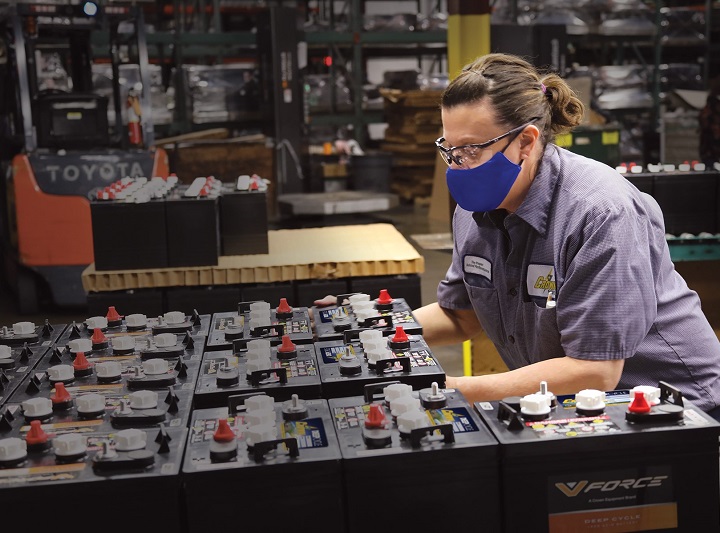
Yes. Lead battery recycling is safe for workers as well as surrounding communities when conducted using proper environmental, health, and safety measures developed and supported by BCI.
It’s also worth asking how recycling lead-acid batteries compares with manufacturing new batteries from raw materials.
Some other battery chemistries require “virgin” materials to achieve peak performance. However, lead is infinitely recyclable — it can be melted down and reused with no loss of performance, which is why a typical new lead battery contains roughly 80% recycled material.
The circular economy for lead batteries is efficient and commercially viable, and BCI’s Model Legislation incentivized all parties in the value chain to participate in the process of turning old batteries into new ones.
This is the unique success of the lead battery industry. The system is commercially viable, environmentally safe, and produces new batteries that do not suffer performance loss. That’s the recipe for a 99% long-term recycling rate.
Where can I recycle used lead-acid batteries?
Thanks to a framework developed by BCI and its members, auto parts retailers are required to accept used batteries in exchange for new ones. If you’re replacing a battery, the merchant should take care of the old battery for you – and often provides credit toward a replacement.
You can also drop off lead-acid and car batteries at your local municipal waste site if you simply have an old battery to dispose of.
For state-by-state information on battery deposits, see BCI’s resource on State Recycling Laws.
Notes on recycling rate figures and BCI commissioned studies
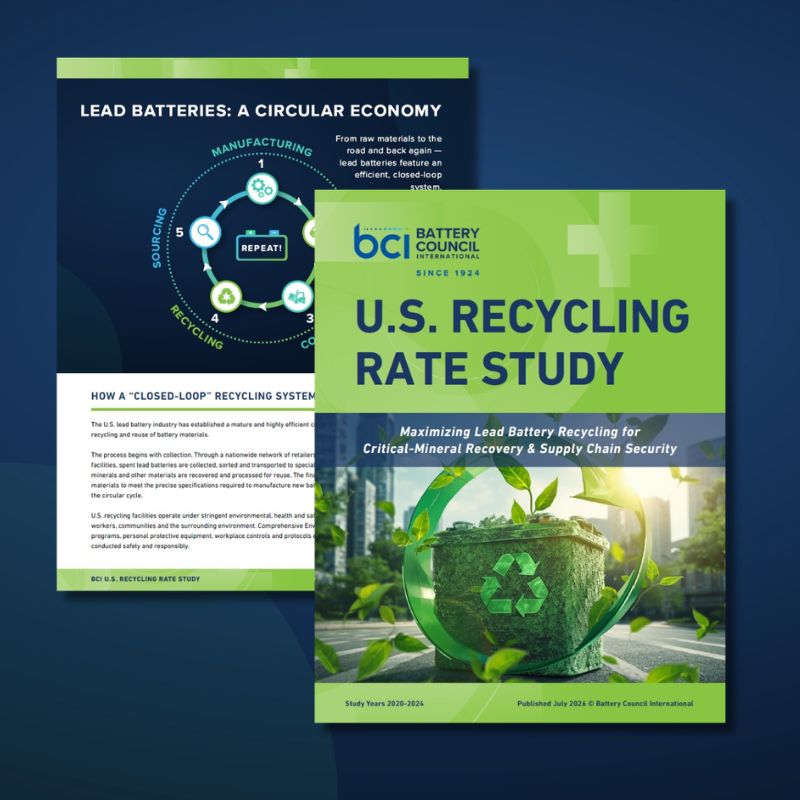
Many BCI recycling rate studies span multiple years rather than reporting a single year in isolation. BCI currently performs five-year studies of U.S. recycling rates rather than annual reports because the physical system of collection and recycling does not run on a predictable cycle.
Battery sales move with weather and the economy, scrap moves with the price of lead, and trade moves with freight capacity and tariff schedules. Major economic disruptions such as COVID-19 can also dramatically alter sales and use patterns in specific years.
BCI has found that individual factors can push a single year several percentage points higher or lower. Aggregating over five years provides a more accurate view of how the collection and recycling system is working – and long-term averages, such as the 99% rate dating back to 2000 – provide a more complete picture of the industry’s commitment to sustainability and circularity.
Sources include Putnam, Hayes and BCI-commissioned recycling rate studies, 1990–2026. Because of BCI’s multiyear methodologies, the reported annual rates are taken from the average of reported figures for each calendar year. For the year 1986, data gaps were filled using averages between 1985 and 1987 data. Occasionally, recycling rates exceeded 100% when the material recycled (numerator) was greater than the locally produced or generated volume (denominator), because of unique economic factors or scrap trends.
The BCI recycling rate methodology has changed several times since 1960 to reflect evolving production, collection, and recycling practices.