Infinite Recycling and Beyond

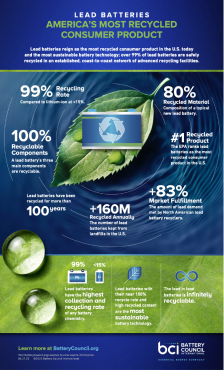
Lead batteries reign as the most recycled consumer product in the U.S. today and the most sustainable battery technology; 99% of lead batteries are safely recycled in an established, coast-to-coast network of advanced recycling facilities.


Lead Batteries Set the Standard for Recycling

Bridging the old to new is the lead battery industry’s specialty. Lead battery manufacturers design lead batteries for recycling, making them the most recycled consumer product in America (aluminum cans are second), according to the U.S. Environmental Protection Agency. That’s made lead batteries the gold standard in how to create a highly successful, closed-loop, domestic circular economy – one where no other industry can compare.

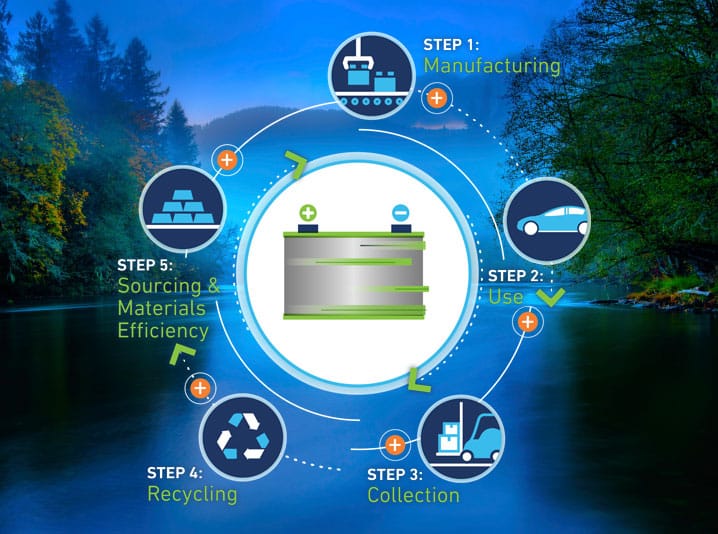
The lead battery industry has optimized the fact that lead in lead batteries can be infinitely recycled without any loss of quality or performance. At their end of life, lead batteries are separated into three key components – all of which are 100% recyclable – lead, plastic and acid. They are then turned into the valuable raw materials U.S. manufacturers need to create new lead batteries and restart the cycle of use-recycle-remanufacture.

Chart showing recycling rates in the U.S.
Graphic of the lead battery circular economy with the five key steps.

A Closed-Loop System of Success

The lead battery success story is grounded in the industry’s nationwide lead battery and recycling infrastructure designed to recycle, reuse and remanufacture the primary components of a battery: plastic, acid and lead. The closed-loop system is not only a model of recycling, but the world’s most successful example of a circular economy, as noted by the World Economic Forum and MIT’s Center for Transportation and Logistics. That success equates as:

  • Nearly 100% of spent lead batteries in the U.S. are recycled.
  • More than 160 million lead batteries are recycled in the U.S. every year and kept from landfills.
  • A new lead battery is typically comprised of 80% recycled material, and the lead in lead batteries is infinitely recyclable.
  • Lead batteries are manufactured primarily from domestically sourced materials, which contributes to our national security.
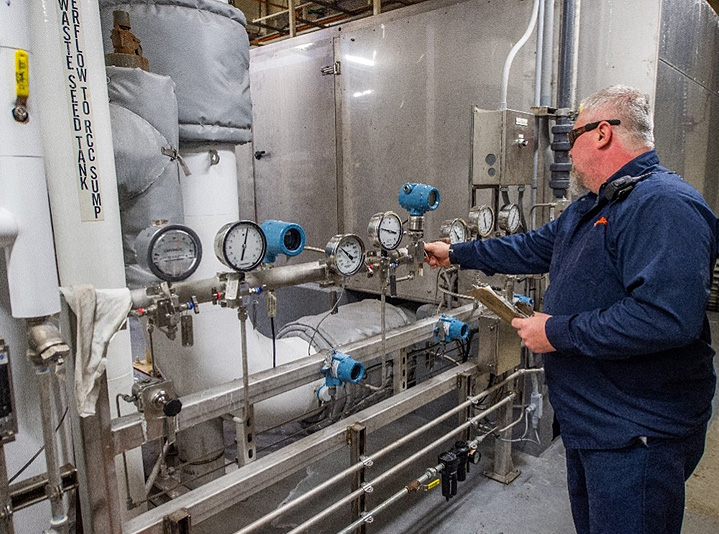
Technician working inside an East Penn battery recycling facility.

Environmental Leadership in Lead Battery Recycling

Lead battery recycling is recognized as one of the most successful and sustainable recycling efforts in the world. Innovative facilities are designed to recover virtually 100% of a lead battery’s components, including lead, plastic, and acid, keeping valuable materials in the circular economy while minimizing environmental impact. Rigorous processes, combined with industry-supported regulations, ensure that recycled materials are safely reclaimed and returned for reuse in new batteries.

Shipping, collection, and handling of spent lead batteries are carefully managed to protect workers, communities, and the environment. Both flooded and sealed batteries are transported under strict guidelines, and properly tested non-spillable batteries benefit from regulatory exceptions that maintain safety while improving efficiency. Today, the lead battery industry maintains a sustained recycling rate of 99%, demonstrating decades of commitment to environmental stewardship and safe, responsible recycling practices.

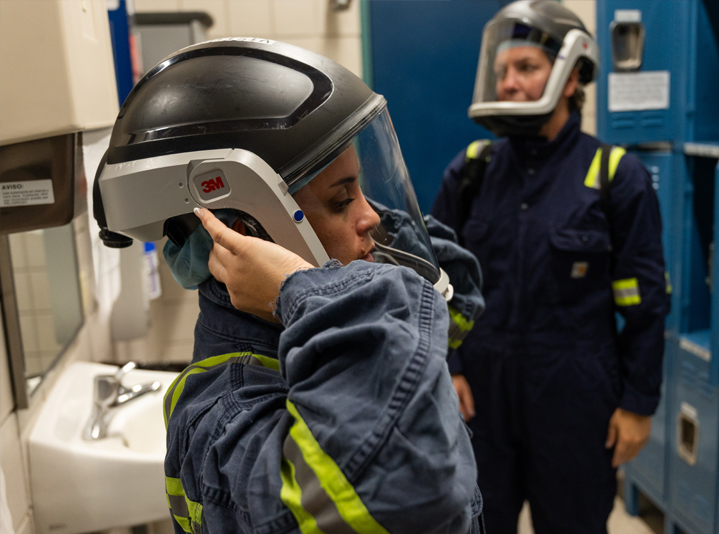
Lead battery recycling employees putting on PPE for employee safety.

Prioritizing Employee Health and Safety

The health and safety of workers in the lead battery industry is a top priority for BCI members. From rigorous training and personal protective equipment (PPE) to environmental controls and regular health monitoring, member facilities implement comprehensive programs designed to protect employees on the job and beyond.

The lead battery recycling industry also fosters a culture of safety that goes beyond compliance. Regular refresher training, safety audits, and engagement initiatives ensure that employees remain informed, empowered, and actively involved in maintaining a safe workplace. By combining advanced safety protocols with ongoing education and monitoring, facilities protect not only their workforce but also the surrounding communities.

Promoting Responsible Lead Battery Recycling

The U.S. lead battery industry, with its established circular infrastructure, is a model for other countries and battery energy storage chemistries in how to responsibly source, use, reuse and manage materials.

The industry is committed to working with others to end informal battery recycling in other parts of the world.

Pete Stanislawczyk, East Penn

For more than a century, lead batteries have powered progress. Their proven resilience and sustainability will make them indispensable to the future of energy.

Pete Stanislawczyk, CEO, East Penn Manufacturing Company