About Battery Separators

Battery separators are a critical safety and performance component across battery technologies, including lead, flow, and lithium-ion. Though often overlooked, the separator plays a central role in enabling chemical reactions to occur safely and efficiently across battery chemistries – supporting reliable operations from automotive starting batteries to high-capacity industrial systems.
What is a Battery Separator?

A battery separator is a porous membrane designed to keep the positive and negative electrodes separated to prevent electrical short circuits and, at the same time, allow for rapid transport of ionic charge. Without a separator, a battery would short-circuit, overheat, or fail immediately, making a separator essential to battery safety, performance, and lifespan.

While the function of a battery separator is consistent across battery chemistries – to enable electrochemical reaction while maintaining internal safety and stability – the materials and structure differ based on the specific battery type.

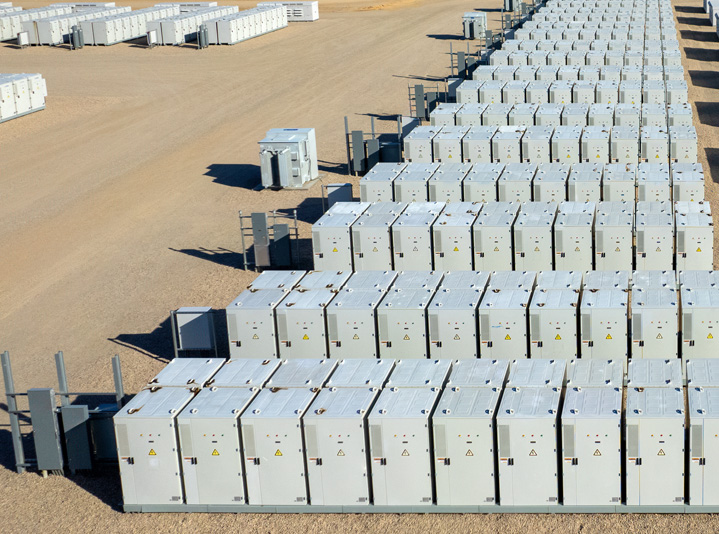
Batteries supply backup power to critical applications

Why a Battery Separator is Important

Every battery – whether powering a vehicle, forklift, power grid, or data center – relies on four essential components working together to store and release energy:

  • Positive Electrode: Accepts electrons during discharge.
  • Negative Electrode: Gives up electrons during discharge.
  • Electrolyte: Conducts ionic current, allowing ions to move between electrodes.
  • Separator (membrane): A thin, porous material that physically prevents the positive and negative electrodes from contacting each other while allowing ions to pass through. Certain flow battery designs may not have a distinct conventional separator but rely on membranes to perform a similar role.

Among these components, the separator is often described as the “silent enabler” of battery technology. It does not generate energy, but its design directly influences:

  • Battery safety
  • Battery life
  • Energy efficiency
  • Reliability in critical applications

As batteries are deployed in increasingly demanding environments and operating conditions – including remote installations, elevated operating temperatures, high-frequency cycling, essential backup power systems, and critical national infrastructure – the role of the separator becomes not just important, but essential.

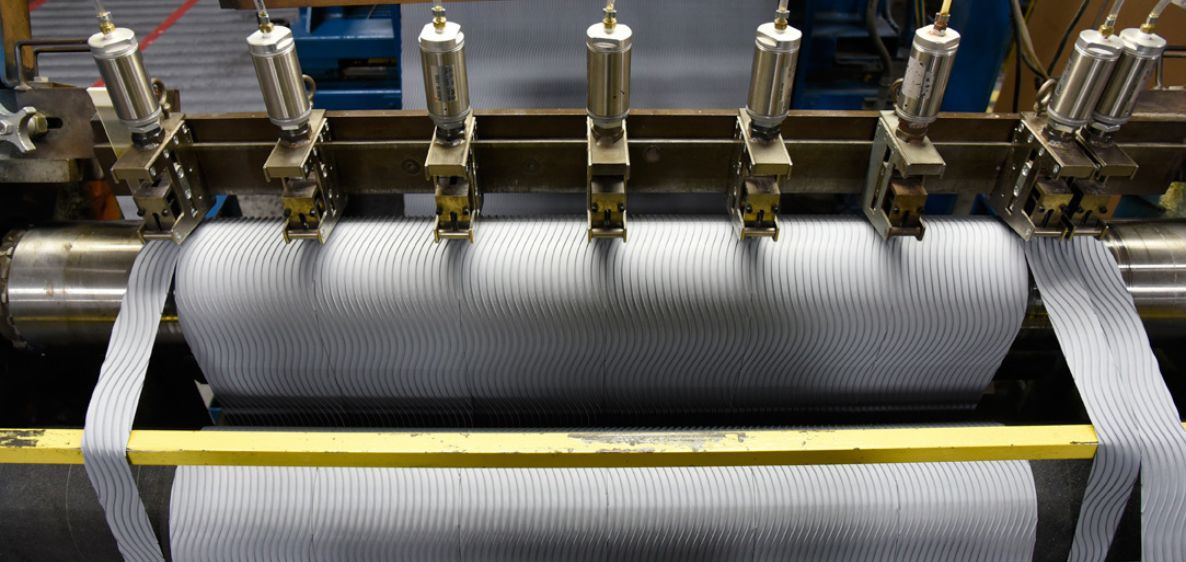
Industrial battery separator set, Fabio Trigo

Separator Requirements in a Battery

To function properly, a battery separator must meet several key requirements:

  • Electrical Insulation: The separator must prevent contact between the positive and negative electrodes to avoid short circuit.
  • Chemical and Electrochemical Stability: It must remain stable over thousands of charge and discharge cycles to ensure long battery life.
  • Porosity: The separator contains microscopic pores that allow ions to move through the electrolyte while electrons travel through the external circuit.
  • Thin Structure: A thinner separator allows more active material in the battery, helping maximize energy density without sacrificing safety.

As batteries are pushed to deliver longer service life, extended run times, and higher energy capacity, performance demands on the battery separator continue to rise. Innovative separator designs play a critical role in improving cycle life, increasing battery capacity, and ensuring batteries can reliably perform in diverse environments, whether deployed in the field, on the factory floor, or supporting critical infrastructure.

Lead Battery Separators

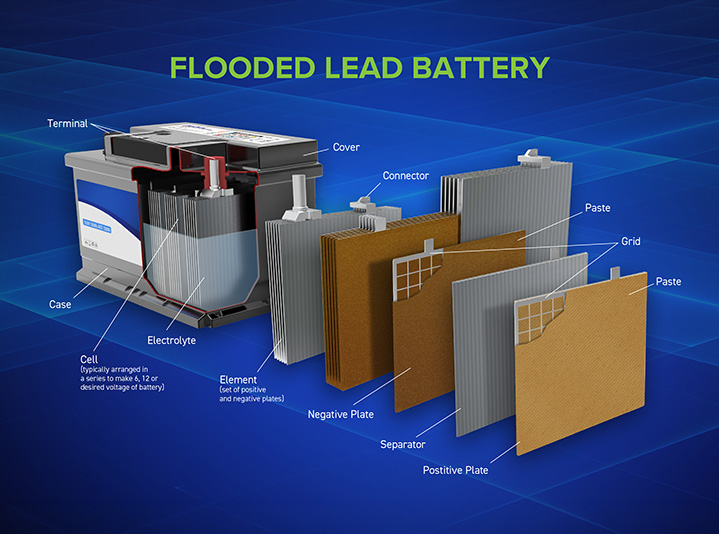
Lead battery separators are designed for durability, chemical resistance, and electrolyte contact. Common applications include automotive starter and auxiliary power systems, marine and industrial equipment, forklifts and logistics operations, and uninterruptible power supplies (UPS).

Common Lead Battery Separators:
  • Microporous Polyethylene (PE) Separators: These are the industry standard for conventional flooded starter, lighting, and ignition (SLI) automotive batteries and many industrial batteries. They are often designed using polyethylene blended with silica filler to achieve high porosity, chemical stability, low electrical resistance, and excellent mechanical strength.
  • Absorptive Glass Mat (AGM) Separators: These are widely used in maintenance-free, and deep-cycle batteries. AGM consists of ultra-fine glass fibers that absorb and immobilize the sulfuric acid electrolyte. They are increasingly common in modern vehicles equipped with start-stop technology, offering improved charge acceptance, superior vibration resistance, and high-rate performance.
  • Glass Fiber / Non-woven Fibrous Separator: These separators are commonly used in deep-cycle, industrial, and renewable energy storage lead batteries. Manufactured from glass or synthetic fibers formed into a non-woven mat, they offer high electrolyte absorption, low electrical resistance, and strong plate separation. Sometimes, these overlap with AGM technology when used to absorb the electrolyte.
  • Polyvinyl Chloride (PVC) / Rubber Separators: These separators are made from traditional polymer materials and continue to be used in select industrial lead battery applications. Known for their durability and reliable electrolyte retention, PVC and rubber separators provide stable plate separation and long-term performance in demanding environments. They are suitable for traction batteries, stationary industrial systems, and legacy battery designs.
  • Gel Battery Separators: Designed for gel lead batteries, these separators work with the sulfuric acid solution that has been immobilized in a gel form, supporting and stabilizing the structure for consistent ionic transport and preventing plate contact. They offer long cycle life, excellent deep-discharge performance, and low maintenance, making them suitable for mobility, renewable energy storage, and industrial deep-cycle applications.

Lithium-ion Battery Separators

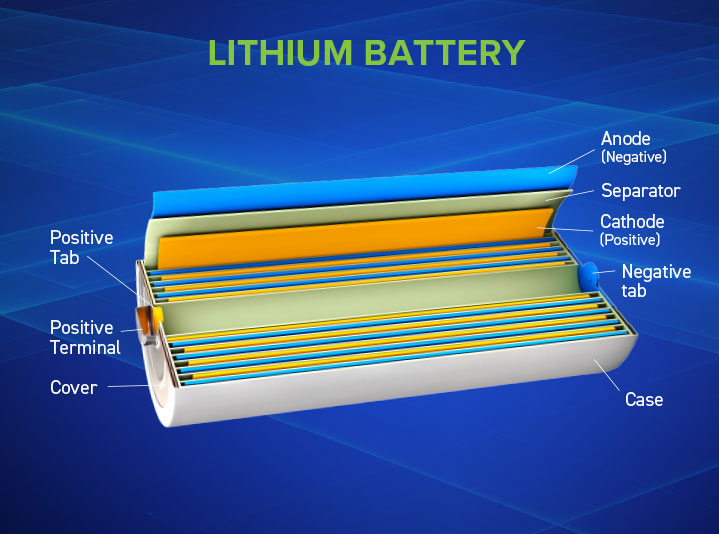
Lithium-ion battery separators are designed to balance thinness, porosity, and thermal stability to support the chemistry’s high energy density and efficient ion transport.  Common applications include electric vehicles and motive power systems, and compact energy storage solutions where performance, energy efficiency, and reliability are critical.

Common Lithium-ion Battery Separators:
  • Microporous Polyolefin Separators (PE, PP, PP-PE-PP Trilayer): Primary commercial separator type used in high-energy and high-power lithium-ion cells across electric vehicle traction packs, industrial motive power, large stationary energy storage, and rugged outdoor equipment batteries. Manufactured from microporous polyethylene (PE), polypropylene (PP), or multilayer PP-PE-PP structures, these separators offer high porosity for efficient ion transport, strong mechanical strength, and consistent pore distribution.
  • Thermally Enhanced Microporous Separators (Thermal Shutdown/High-Temp PE): Within the broader microporous category, certain PE-based separators are engineered with optimized pore structure and thermal behavior to improve safety in high-current or elevated-temperature environments. These designs exhibit a controlled thermal shutdown phenomenon, reducing ion flow when overheated – a critical feature for EVs and industrial batteries.
  • Ceramic-Modified or Composite Microporous Separators: This subset includes polyolefin membranes that are modified with ceramic particles or composite coatings to raise thermal and mechanical stability without sacrificing porosity. While not as universally used as base polyolefin films in every application, ceramic-modified separators are increasingly specified in EV and stationary storage modules where higher safety margins and dimensional integrity are prioritized.
  • High-Strength Nonwoven/Composite Reinforced Separators (Emerging Industrial Use): In large-format batteries for motive power and data center energy storage, reinforced composite separators – combining microporous polyolefin with nonwoven fibers or advanced substrates – are sometimes used to enhance tear resistance, puncture toughness, and overall durability.
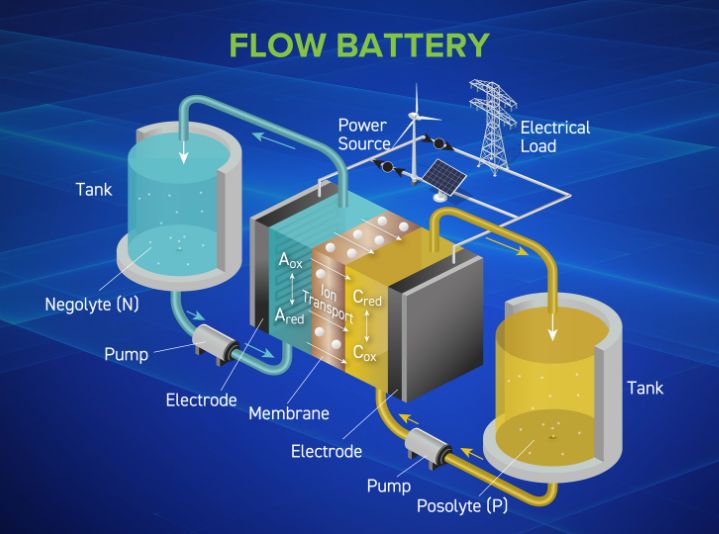
Diagram with callouts on the components of a flow battery.

Flow Battery Membranes/Separators

Flow battery membranes are designed for long-duration energy storage, chemical stability, and controlled ion transport between electrolyte solutions. Common applications include grid-scale energy storage, renewable energy integrations, microgrids and off-grid power systems, industrial energy management, and uninterruptible power supply (UPS) installations requiring extended discharge durations.

Common Flow Battery Membrane Types:
  • Perfluorosulfonic Acid (PFSA) Ion Exchange Membranes: These are the most widely deployed ion-selective membranes in vanadium redox flow batteries (VRFBs) and other aqueous redox systems. PFSA membranes are highly selective for proton transport, chemically stable in strongly acidic electrolytes, and durable under long-term cycling. They serve to prevent electrolyte crossover while allowing the necessary ionic conduction that enables the redox reactions in stationary energy storage systems.
  • Hydrocarbon Ion Exchange Membranes (Non-Fluorinated/AEM/PEM Alternatives): These membranes reduce cost and environmental concerns associated with PFSA materials. Tailored for lower electrolyte crossover and improved ionic selectivity, they offer potential manufacturing cost advantages. Hydrocarbon ion exchange membranes are gaining interest for next-generation flow batteries when there is a priority on lifecycle cost and sustainability.
John Howes

The Energy Storage Grand Challenge report….reflects growing recognition from DOE and others that lead batteries are among important energy storage technologies that require investment to secure America’s global leadership on technological innovation and a green economy infrastructure.

John Howes, Principal, Redland Energy Group