Powered by People is a series that highlights the essential workers who support battery manufacturing, recycling, innovation, and logistics. These dedicated employees are the true strength of the battery industry and perform key roles that protect critical mineral supply chains, develop new technologies, and ensure a resilient energy storage industry to power the economy of tomorrow.
Ask Randy Reyer how he found his way into environmental, health and safety, and he starts not with a grand plan, but with a first job, a manager who noticed his work ethic, and advice that stayed with him: build a toolbox you can take anywhere.
Today, Randy is Vice President, Environmental, Health & Safety at EnerSys, where his work touches manufacturing operations, worker safety, environmental controls, equipment design, compliance and industry collaboration. But his path into the field began at Laidlaw Environmental Services, where he worked as a project manager and field chemist supporting the Mid-Atlantic GE Aerospace, later Martin Marietta, division across two states and eight facilities.
When an Environmental Engineer role opened, Randy applied. He did not have every skill listed, but the EHS manager had seen how he worked.
“He told me that although I did not have all the skills required, he had witnessed my work ethic,” Randy said. “He said the job would allow me to build a set of skills for my life’s toolbox that I could take with me anywhere.”
A Career Built on Learning
The role introduced him to the full scope of EHS in a large defense manufacturing facility with more than one million square feet of manufacturing space and more than 3,000 employees. He cross-trained with environmental, health, safety, fire prevention and medical teams, gaining exposure to the many disciplines that come together to protect people in complex industrial settings. After three years, when a potential relocation to California prompted him to look for a new opportunity, he joined Yuasa Exide, Inc., now known as EnerSys.
It became more than a next step. It became a long-term home.
“EnerSys is a special company,” Randy said. “If you like being busy and learning something new every day, then EnerSys is the place for you. I am challenged daily, work with great people, and the company continues to grow and change.”
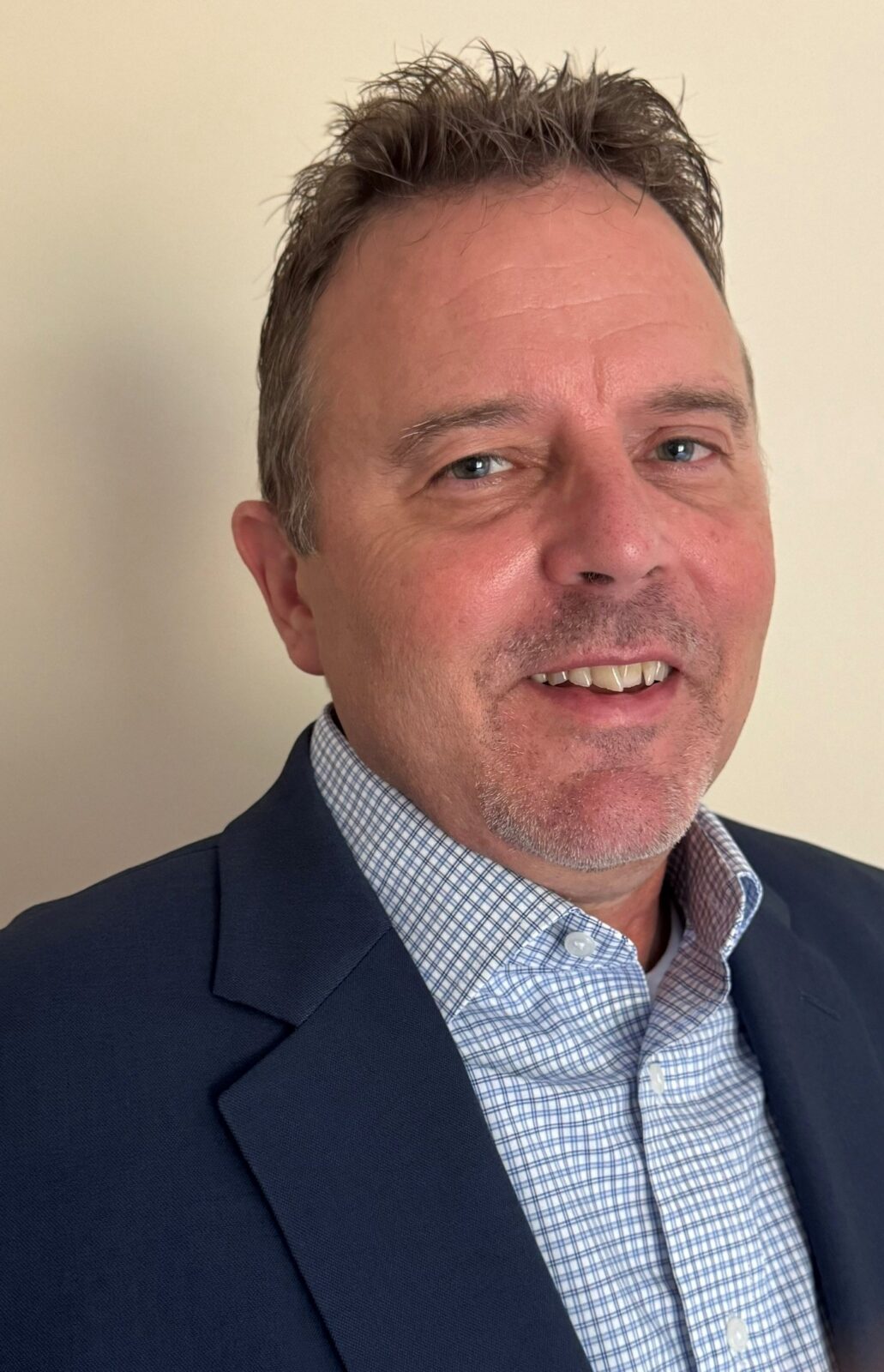
That pace suits the work. EHS is broad by nature, especially in battery manufacturing. It requires technical knowledge, practical judgment and the ability to work across functions, from production and maintenance to engineering, human resources, finance, sales and customer-facing teams. Randy describes it as both demanding and deeply rewarding.
“A career in EHS is extremely rewarding and extremely challenging,” he said. “It allows you to interact with all aspects of the business.”
How Safety Has Changed on the Plant Floor
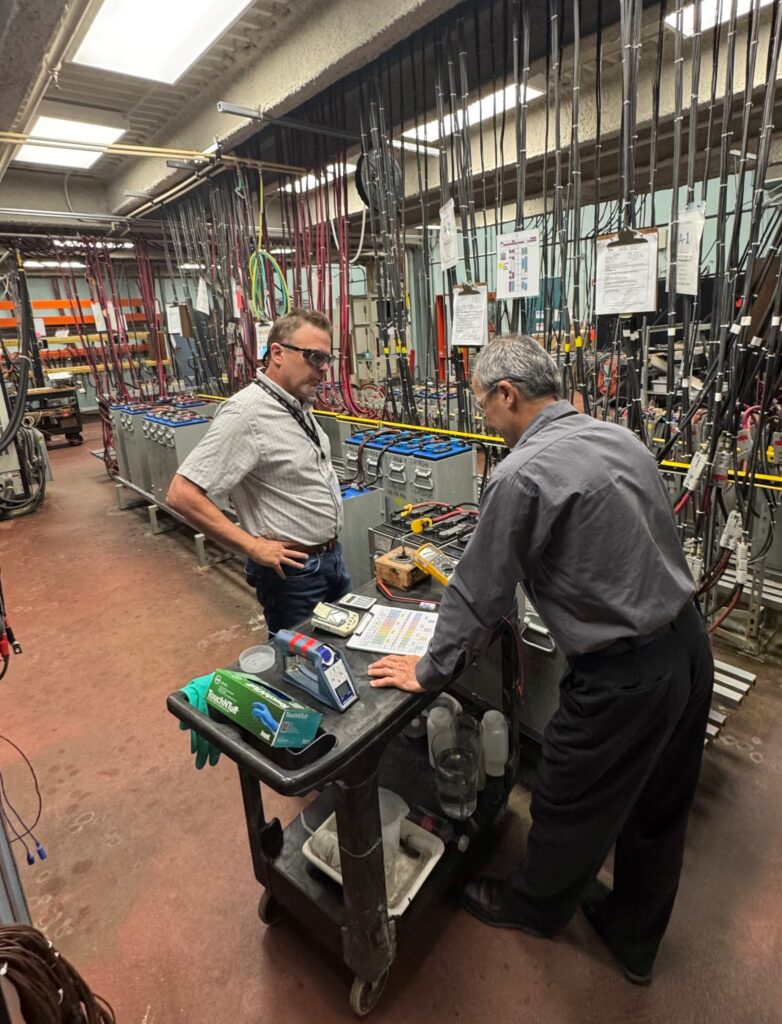
Randy in the EnerSys HQ Corporate Laboratory
Over the course of Randy’s career, safety in the lead battery industry has changed significantly. When he began, much of the equipment used in lead battery manufacturing was older, reflecting processes that had evolved slowly over many decades. The fundamentals of making a battery were well established, and many operations relied more heavily on manual work and legacy equipment.
Today, Randy sees a different environment. Equipment has become more automated. Processes have been redesigned to help separate employees from hazards. Technologies such as light curtains can trigger automatic equipment shutdown when a worker enters a protected area, reducing risk around automated or even robotic machinery. Environmental controls have also become more advanced, including more automated systems for monitoring and managing emissions.
“Compliance has gotten so much better across safety, health and environmental risks,” Randy said. “EnerSys understands the risks and costs to the business if we fail to keep our workers healthy and safe.”
Safety Starts Before the Work Begins
For Randy, strong EHS performance starts before the work begins. It is not something added after a task is planned. It has to be part of the way teams think, prepare and operate.
“Safety is number one,” he said. “The culture on safety is so embedded that safety is no longer an afterthought. It is thought about prior to starting the day or any task to prevent worker injuries.”
That day-to-day culture is supported by leadership commitment and disciplined follow-through. Randy points to EnerSys’ focus on key performance indicators, root cause analysis and corrective actions when trends or issues move counter to company goals. Those tools help teams identify problems, understand causes and take practical steps to improve.
He also believes industry collaboration matters. EnerSys has worked through Battery Council International and with industry equipment suppliers to encourage improvements in equipment design. The goal is straightforward: address EHS considerations earlier, reduce the need for costly modifications after equipment is purchased, and thereby design out issues before they reach the plant floor.
It is practical work that may not always be visible outside the industry, but it makes a difference. Better equipment design can better reduce risk. Better data can guide improvement. Better communication across the business and industry can help one facility learn from another for the better good of all.
An Industry Focused on Continual Improvement
Randy says one common misconception about the battery industry is that it is standing still.
“The battery industry is very focused on continual improvement and doing the right things as it relates to EHS,” he said. “Companies cannot afford to operate like they did in the past. Our customers demand better, our leadership demands better, our neighbors expect more, and regulators monitor our operations to ensure we perform.”
The challenges continue to evolve. Around the world, regulations are changing in areas such as worker lead exposure, lead-in-air exposure, ventilation and permitted emissions. For EHS professionals, that means staying current, understanding the science and the regulatory landscape, and helping teams translate requirements into effective action at the site level.
Sharing Practical Solutions Across Borders
It also means sharing knowledge beyond one company or one country. Randy described an opportunity connected to BCI (Battery Council International) and EnerSys to share practical EHS knowledge with battery professionals in Sri Lanka. The focus is on real-world solutions for managing health and safety risks in lead industry operations.
“Lead is the same all over the world,” Randy said. “The risks to worker health and safety are very similar in how workers may be exposed and how workers can be protected.”
What differs by region may be the processes, equipment, resources and controls available to manage those risks. Randy has worked with operations in India, China, Africa, Australia, South America and Europe, giving him perspective on both the shared challenges and the local differences. He believes that kind of experience is most useful when it is shared in practical terms, not as theory.
“Providing real-life lead industry challenges and solutions is important because each of us has our own challenges in solving lead exposure risks,” he said. “When people can ask real-world questions and receive ideas, industry tools and solutions, it helps bring the whole industry to the next level.”
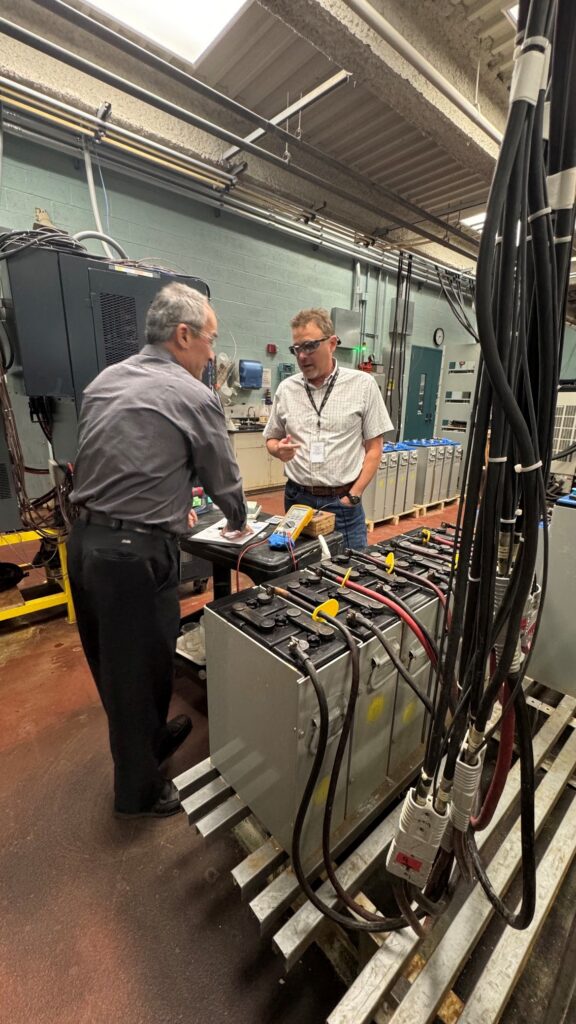
Randy in the EnerSys HQ Corporate Laboratory
A Message for the Next Generation
For those considering a career in EHS, Randy offers a clear message: the work reaches everywhere. Safety touches the office, the shop floor, janitorial teams, maintenance, production, human resources, finance, sales and customers. Responsibilities may vary by country, but the foundation is the same. Strong EHS performance begins with leadership support and becomes meaningful through daily action.
That is what has kept Randy engaged through years of change: the opportunity to solve problems, support people and help strengthen an industry where reliability, resilience and safe operations matter every day.
For him, the lesson from that first EHS manager still holds true. Build the toolbox. Keep learning. Stay close to the work. And never lose sight of the people.
“Safety touches everyone,” Randy said.