

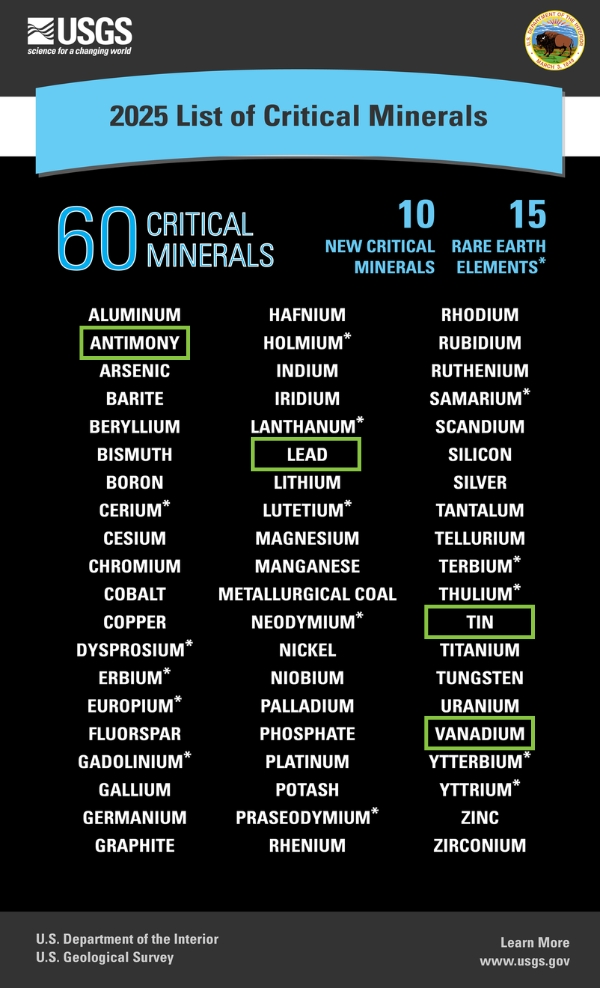
In 2025, the U.S. Geological Survey designated lead as a critical mineral, recognizing this battery metal’s essential role in the American economy. Yet a portion of this vital material continues to leak offshore through the improper export of scrap batteries — undermining supply chains and circumventing North America’s world-class recycling network.
More than 160 million lead batteries reach the end of their useful lives in the U.S. each year. The vast majority of these are recycled responsibly at domestic facilities that recover lead, tin, antimony, and other critical minerals. Those materials are then safely turned into new batteries that power cars, trucks, forklifts, energy storage systems, and emergency and military vehicles.
This circular economy is a clear win for national supply chain security and for the environment. Batteries are the most recycled product in the United States, using an integrated North American network built and operated by industry and without cumbersome government bureaucracy or subsidies.
Unfortunately, some exporters are sending the nation’s scrap batteries to distant shores where safety standards are less rigorous. These companies often deploy unscrupulous practices such as mislabeling exports, in violation of environmental and trade compliance laws.
BCI and its members support trade built on trust and a shared emphasis on health and safety. Any company that does business within North America should share the same commitment to protecting the region’s circular economy, and to protecting the communities in which the facilities operate — processing batteries safely and properly everywhere, every single time.
This commitment is longstanding. In 1999, the BCI Board of Directors adopted a resolution calling for international “efforts to bring all regulatory schemes [for battery recycling] to the levels existing in the United States, Western Europe and many other areas.” Further, the resolution declares that the association “opposes the export of used batteries to recycling facilities outside the [USMCA] countries that are known or suspected to use environmentally unsound practices.”
The resolution was reaffirmed by the BCI Board on its 20th anniversary in 2019, and asks each BCI member to collaborate with the association and international authorities in these efforts.
Recent improper trade actions by bad actors threaten the domestic battery recycling ecosystem in North America by siphoning away critical materials and threatening the businesses of those that operate responsibly. Even worse, these bad actors are sending scrap to low-performing facilities that U.S. companies would not do business with.
The North American battery industry is robust, and the intertwined supply chains for raw materials and finished goods alike between the U.S., Canada and Mexico must be protected from unfair foreign competition. Sending lead abroad when world-class recycling technology exists and is growing in North America makes no sense, particularly as regional demand for battery metals is higher than ever before.
Some of BCI’s oldest members have been in operation for more than 100 years, providing good jobs and safeguarding their communities through significant investments in their facilities.
Equally important, these companies have proven it is possible to expand recycling and production capacity responsibly — with even more investments currently in the pipeline. BCI members have met the growing energy storage needs of the global economy through regular production improvements that are always paired with deep investments in worker health and safety and environmental stewardship.
BCI is committed to sharing this success story and holding bad actors accountable everywhere. That’s why BCI and its partners established the Lead Battery 360 framework to share the best practices developed by our members, and to raise standards in underperforming nations. As of early this year, the program boasts 10 participants worldwide. BCI members are also providing real-world safety expertise through in-person training events such as the Learning Lead Course 2026.
For decades, North America’s battery companies have worked tirelessly to keep critical materials onshore and meet growing energy storage needs — all while operating at the highest standards of health and safety.
But work remains to be done. Shipping scrap batteries away from high-performing facilities stands in opposition to the core values of BCI and our members.
The science is clear, the tools are available, and there are established alternatives to improper exports and poor recycling practices. BCI urges policymakers and other stakeholders to create policies that keep battery materials in high-performing facilities — particularly when those recyclers are located domestically and can keep critical minerals at home where they belong.